

Richard Bardy
2026-09-01
⭐⭐⭐⭐⭐ Beyond 5 Stars! If you have a complex land, grading, or drainage issue, look no further than Brian at Custom Cut Land Works. We hired Brian to rework ou… Read more
Before we dig in Laurens, we read the site: courthouse-town acreage, Little River bottoms and the red-clay uplands the USDA named for this county.
Excavation decides whether everything above it stays level and dry. The dig, the trenches, the backfill: none of it shows in the finished photos. All of it shows up three years later if it was done cheap. The classic hidden defect is loose backfill — it settles along every trench and foundation edge, cracking walks and sinking driveways. Our backfill goes in as thin, compacted lifts. Every trench, every time.
Every dig starts legally: SC811 locates filed and the three-business-day wait respected before a bucket touches ground. And because Upstate lots sit on dense red clay, sometimes rock, discovery conditions go in writing before work starts. If the ground surprises us, the price doesn’t surprise you.
SC811 tickets filed, utilities marked, boundaries confirmed before anything opens.
Pads, footings, and trenches cut to depth; topsoil stripped and stockpiled for your final landscape, never buried.
Thin layers, compacted each pass. The difference between a trench line you forget and one you re-level for years.
Spoils hauled or graded out, erosion controls set, site left ready for the next step.
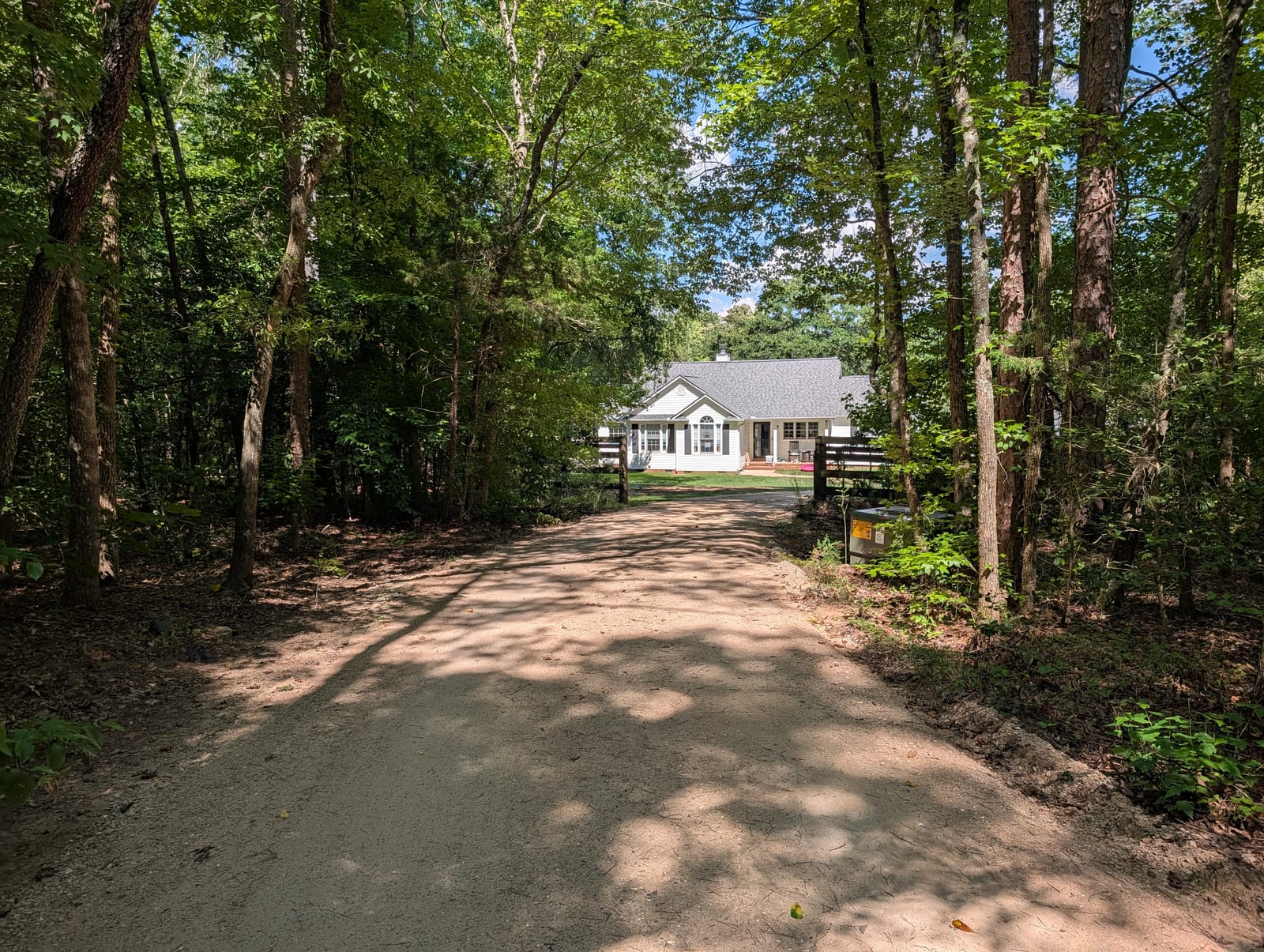
Residential and small commercial site work: building pads, footings, stump and rock removal, trenching for water and drainage lines, and cutting driveways into sloped ground.
Usually, yes. Compact excavators fit through standard gates and work in tight residential spaces. It’s exactly what they’re built for, and we confirm access on the site walk.
Yes. New or relocated driveways onto state routes like US 221, US 76, and SC 252 need SCDOT encroachment approval, and Laurens County construction checklists ask for copies of those approval letters. The county also requires a grading and land-disturbance plan showing phased grading, protected buffers, and silt fencing. We help you get the sequence right before any dirt moves.
Custom Cut Land Works
Based on 1 Google reviews
Richard Bardy
2026-09-01
⭐⭐⭐⭐⭐ Beyond 5 Stars! If you have a complex land, grading, or drainage issue, look no further than Brian at Custom Cut Land Works. We hired Brian to rework ou… Read more
Free written estimate. See the price before any work begins.