

Richard Bardy
2026-09-01
⭐⭐⭐⭐⭐ Beyond 5 Stars! If you have a complex land, grading, or drainage issue, look no further than Brian at Custom Cut Land Works. We hired Brian to rework ou… Read more
How we grade in Lyman depends on the ground we’re given: Pacific Place new lots beside hundred-year-old mill-village yards off Groce Road.
Drainage grading has a measurable standard: ground should fall away from your foundation about a quarter inch per foot, a 2% slope, for the first six to ten feet. We grade to that number and verify it by instrument, because a yard that looks flat to the eye can still hold water. Upstate red clay raises the stakes. Our Cecil-series subsoil is nearly impermeable once compacted, so the surface has to move the water — the ground won’t absorb it.
The other half of quality grading is what’s underneath. Fill dumped in one thick layer settles as it wets and dries, cracking the slab or patio above it a year or three later. We place fill in thin lifts and compact every one with dedicated equipment. And we won’t work red clay wet: pushing mud to hit a schedule smears the clay into a crust that causes drainage problems for good.
Laser on site, existing falls measured. We find where the water actually goes before we move dirt.
Organics stripped, fill placed in thin lifts, each lift compacted. No loose fill, no future settling.
Falls away from the foundation at the 2% standard; swales carry water to a proper outlet.
Grades re-checked by instrument; bare clay stabilized so it doesn’t wash before grass takes hold.
Usually, yes. Most residential drainage problems are slope problems: water with nowhere to go. Regrading, swales, and crowning solve what French drains often just hide.
We set a rotary laser level on the site and check grades against it as we work, instead of eyeballing the slope. It’s how building pads come out flat and drainage swales actually carry water where they should.
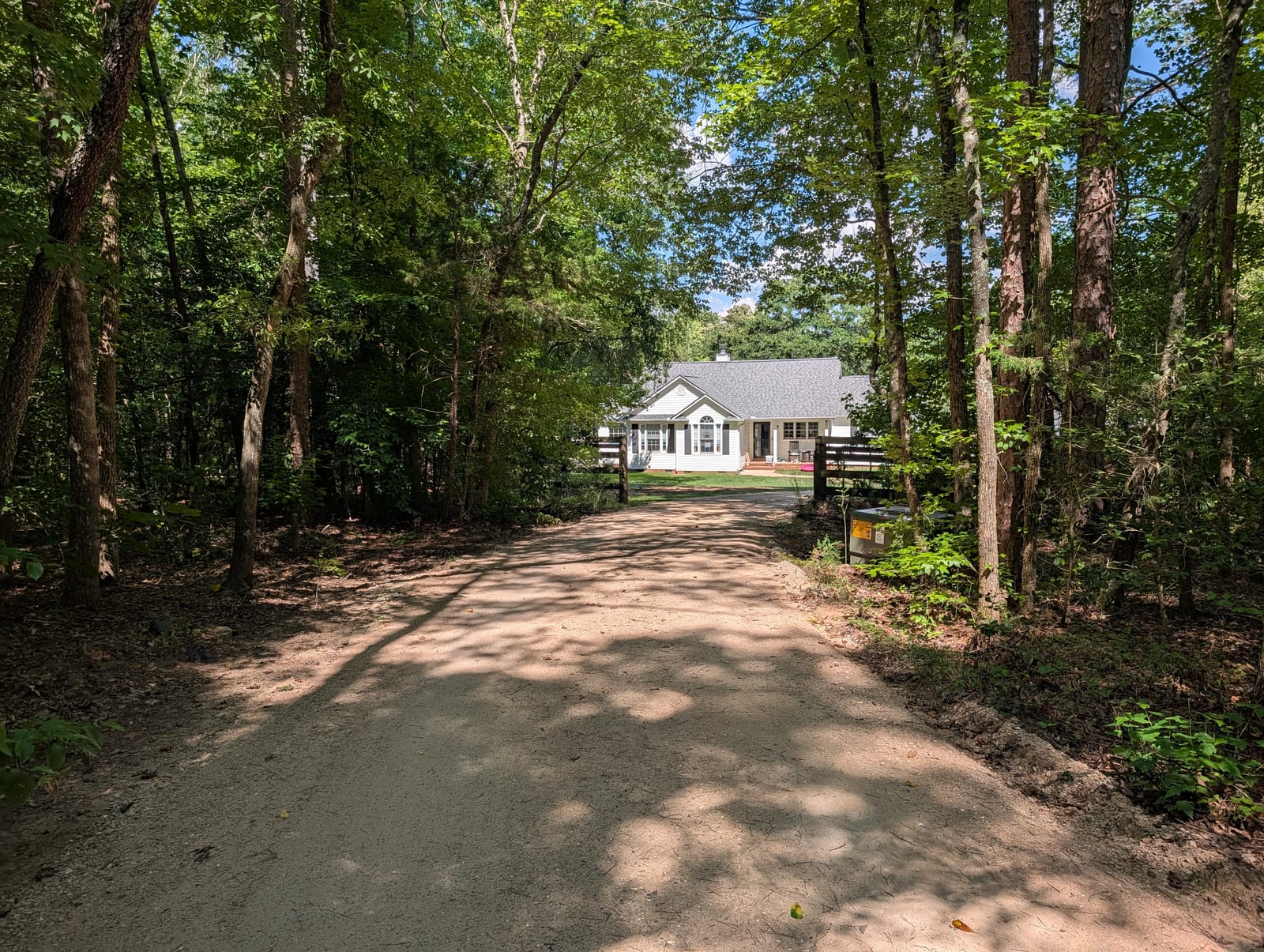
The red Cecil clay is the usual culprit. Gravel sinks into wet clay and washes on slopes. The subsoil here runs 40 to 60 percent clay. It drains fine undisturbed but seals up once compacted, so water sits or runs where you don't want it. A geotextile base, a proper crown, and drainage relief are what keep a driveway on this ground.
Custom Cut Land Works
Based on 1 Google reviews
Richard Bardy
2026-09-01
⭐⭐⭐⭐⭐ Beyond 5 Stars! If you have a complex land, grading, or drainage issue, look no further than Brian at Custom Cut Land Works. We hired Brian to rework ou… Read more
Free written estimate. See the price before any work begins.