

Richard Bardy
2026-09-01
⭐⭐⭐⭐⭐ Beyond 5 Stars! If you have a complex land, grading, or drainage issue, look no further than Brian at Custom Cut Land Works. We hired Brian to rework ou… Read more
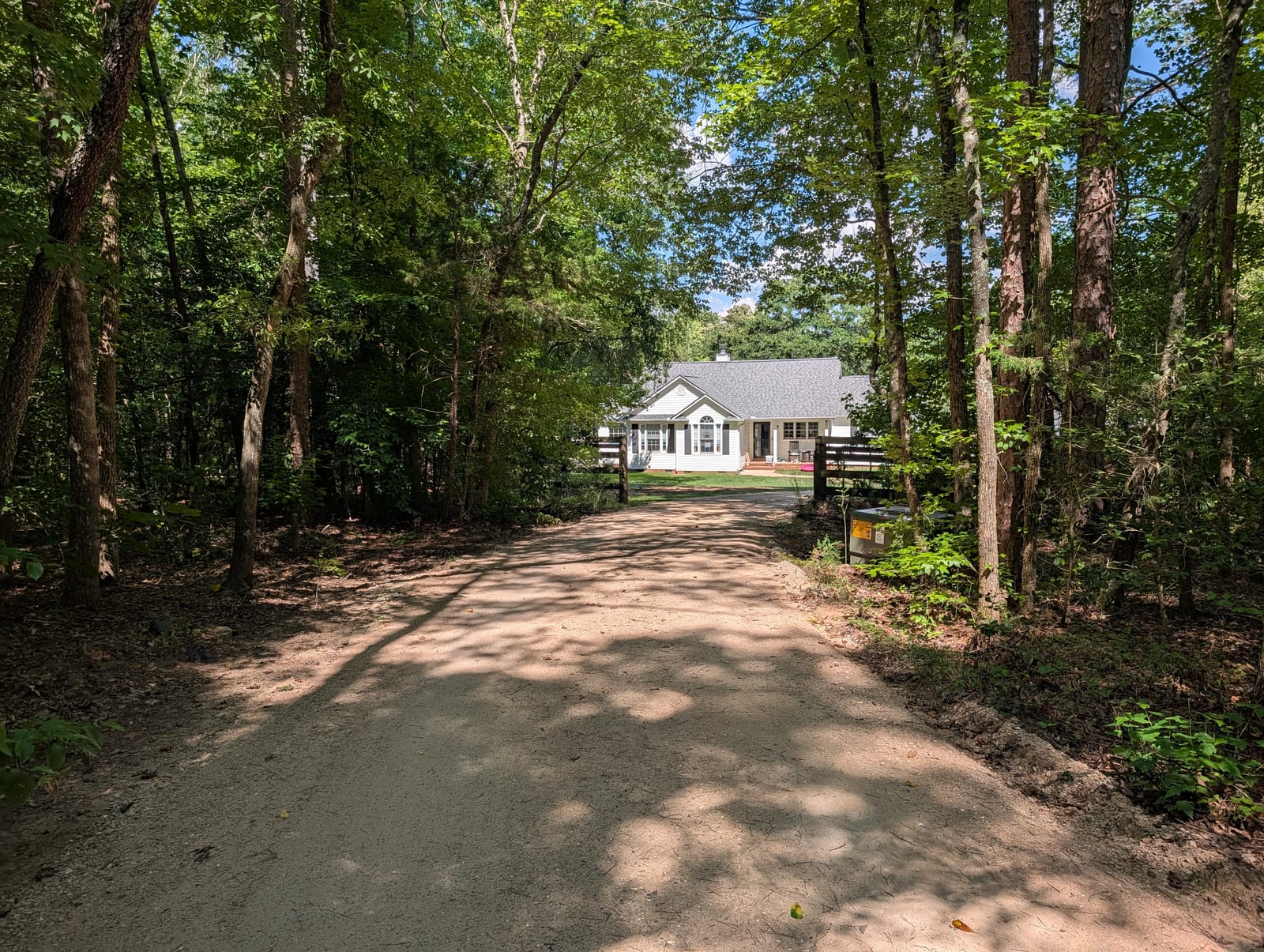
Gravel driveways in Five Forks get built for what’s here: converted pasture, Kilgore Farms to Five Forks Plantation, on hard-packing Cecil clay.
A gravel driveway that lasts is built in layers: topsoil stripped to firm ground, the subgrade shaped and compacted with a crown built in, woven fabric over our red clay so the stone can’t punch down into it, then crusher run compacted in thin lifts until it drives like a solid surface. The cheap version is a load of rock bladed over the dirt. It looks the same for one season. Then the clay eats it, the ruts come back, and you’re buying gravel again.
Rebuilds start with the question the last load skipped: why did it wash out? No crown, a blocked culvert, gravel sitting on topsoil. We find the cause, fix it, then rebuild the layers. Driveway entrances on public roads have their own rules (SCDOT and the county have culvert and encroachment requirements), and we handle that paperwork as part of the job.
We walk the route, find where the water goes, and diagnose any washout at its cause.
Topsoil stripped, subgrade crowned and compacted, fabric down over clay where it earns its keep.
Crusher run spread and compacted in thin layers until it locks together.
Crown carried through every layer, ditches shaped, culvert set where the entrance needs one.
Almost always because it was built without a crown or a proper base. Water needs to shed off the sides. A driveway graded flat, or laid thin over topsoil, turns into a creek bed every storm. We rebuild the base and crown it so rain runs off instead of through.
Yes. Widening, adding a parking pad, or extending a drive to a new garage or shop are common jobs. New sections get the same base treatment so they wear evenly with the old.
Greenville County, not Simpsonville. Five Forks is unincorporated, so the county's Land Development office handles it: disturbing an acre or more, or increasing peak runoff by more than one cubic foot per second, triggers a county Land Disturbance permit, and stormwater-quality rules start at 10,000 square feet of disturbance. Erosion and sediment controls are required on any land-disturbing work, and many neighborhoods here also have HOA covenants worth checking before clearing tree lines or changing grades near property lines.
Custom Cut Land Works
Based on 1 Google reviews
Richard Bardy
2026-09-01
⭐⭐⭐⭐⭐ Beyond 5 Stars! If you have a complex land, grading, or drainage issue, look no further than Brian at Custom Cut Land Works. We hired Brian to rework ou… Read more
Free written estimate. See the price before any work begins.