

Richard Bardy
2026-09-01
⭐⭐⭐⭐⭐ Beyond 5 Stars! If you have a complex land, grading, or drainage issue, look no further than Brian at Custom Cut Land Works. We hired Brian to rework ou… Read more
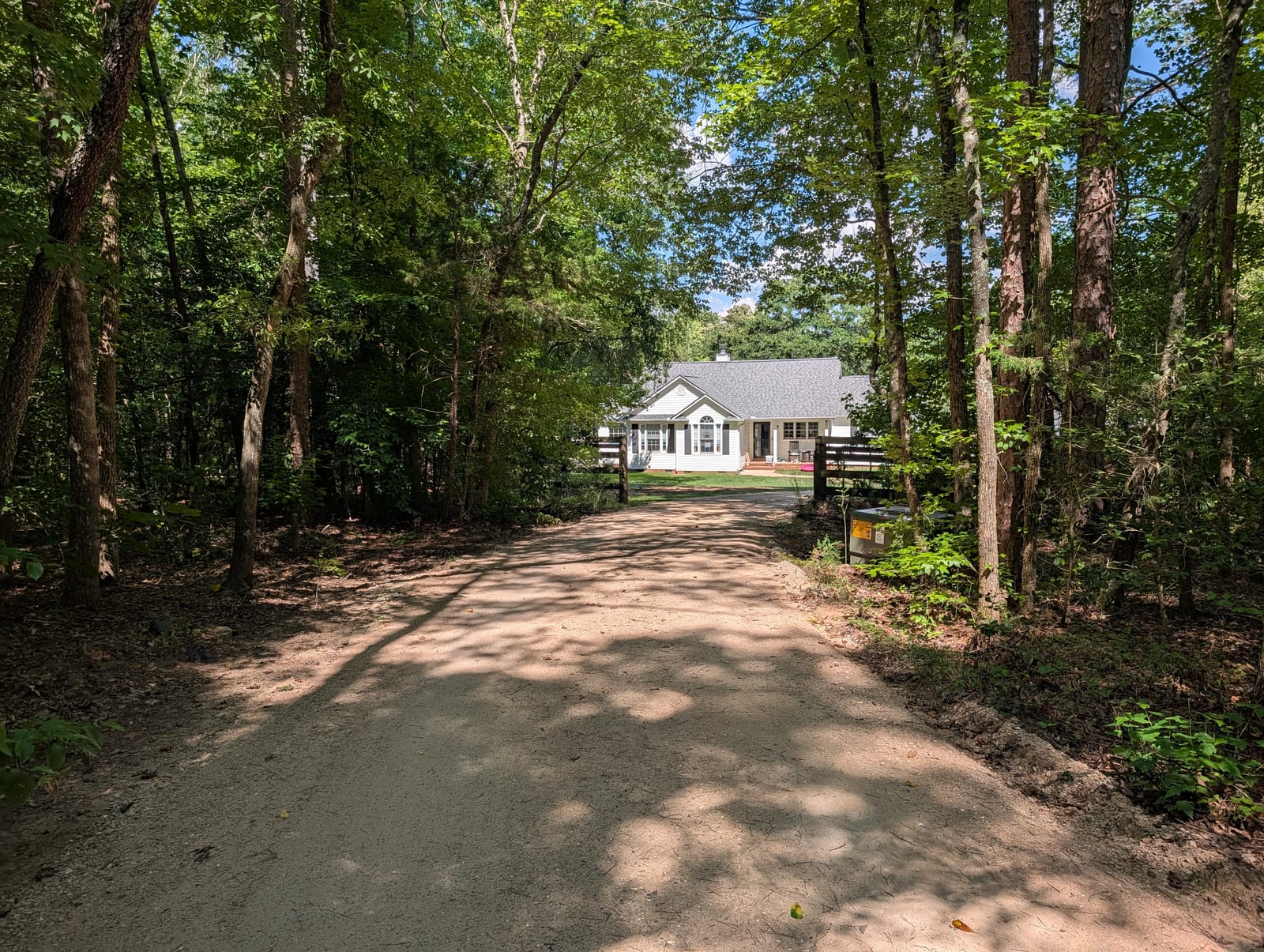
When we clear land in Pendleton, it’s the 1790 historic district and the homesites growing around it.
Land clearing covers two different jobs, and knowing which one your property needs is where a good quote starts. Clearing removes what’s above the ground: brush, saplings, trees. Grubbing goes further and pulls the stumps, roots, and buried debris out below grade, and only grubbed ground is ready to build on. So we scope by zone: mulch the back acreage you want open, grub the pad where the house is going.
The cheap shortcut in this trade is burying debris in a pit on site. It decays and settles for years, and turns into sunken driveways and cracked slabs long after the contractor is gone. We never bury debris. It’s mulched into the land, hauled off, or burned legally with the SC Forestry Commission notified. The compliance is ours to carry too: SC811 utility locates before any ground opens, county land-disturbance rules, erosion controls. You never hold the fines.
We walk the property with you and flag what stays and what goes. Keep-trees get marked and protected before any machine arrives.
Brush and trees come out. Where you’re building, stumps and roots get grubbed out below grade so nothing settles under your slab.
Mulched into the land, hauled off, or burned with the SC Forestry Commission notified. Never buried on site.
Rough-graded, erosion controls in place, ready for the pad, driveway, or pasture you cleared it for.
Yes. Selective clearing is often the right call. We remove the undergrowth, saplings, and problem trees while protecting the hardwoods that give a property its character.
It depends on acreage, how dense the growth is, and how machines get onto the property. Every clearing job starts with a free site walk, and the number you get is written down.
It changes how we approach it. Roughly 6,300 acres in and around town sit inside the National Register district. The listing itself doesn't restrict private dirt work, but careful, tree-preserving clearing and low-impact grading are the right call near historic structures and streetscapes. For work in the historic core, we advise checking with the town on any local review before cutting.
Custom Cut Land Works
Based on 1 Google reviews
Richard Bardy
2026-09-01
⭐⭐⭐⭐⭐ Beyond 5 Stars! If you have a complex land, grading, or drainage issue, look no further than Brian at Custom Cut Land Works. We hired Brian to rework ou… Read more
Free written estimate. See the price before any work begins.