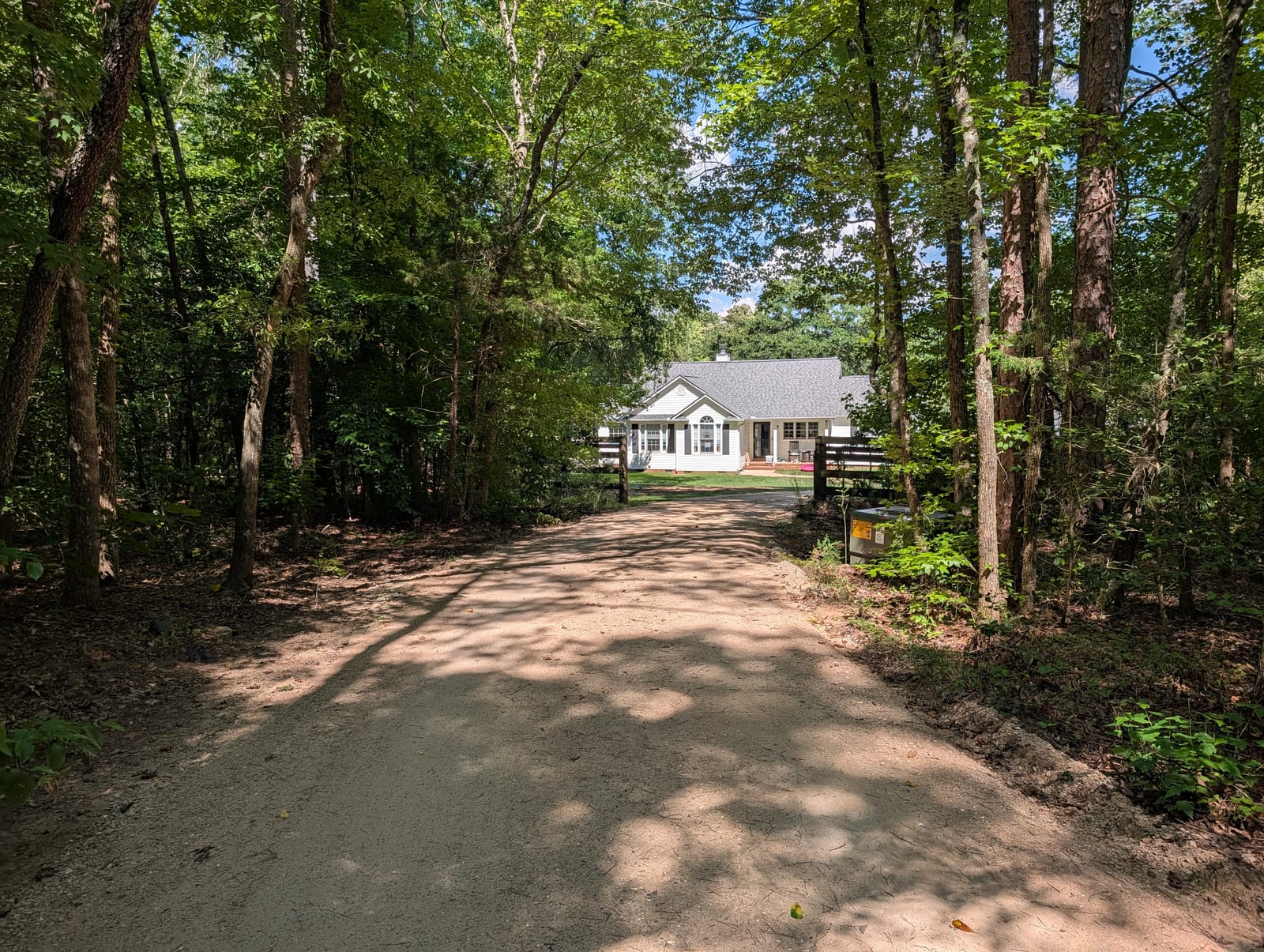
Pasture & hayfield mowing
Grazing ground and hayfields cut on a schedule that keeps weeds from taking the stand. Two or three cuts a season stays ahead of them; one a year keeps open ground open.
Overgrown pasture, hayfield, and vacant-lot mowing across the Upstate. Cut back to ground you can walk, use, and mow again.
Bush hogging is a rotary cutter run over ground that is still open enough to drive: pasture, hayfield, a vacant lot, the back two acres that got away from you. It knocks down grass, weeds, briars, and saplings up to roughly an inch or two thick, and it leaves the cuttings on the ground to break down. What it does not do is take out stumps or change the shape of the land. That is clearing, and it is a different machine and a different price.
The line between them is mostly time. Ground mowed every year stays mowable. Let it go three or four seasons and the saplings pass what a rotary cutter can take, and then you are looking at clearing or mulching to get back to a field you can mow again. If you are not sure which side of that line your property is on, that is exactly what the site walk is for, and we will tell you it is the cheaper job when it is.
What makes this work go wrong is what is hidden in the grass. Old fence wire, dumped concrete, stumps left at ankle height, a rock that has been there since the farm was a farm. We walk the ground before the cutter goes on it, flag what has to be avoided, and cut at a height that clears what is down there.
Heavy brush to whole wooded lots. Cleared, hauled, and left build-ready.
Learn more →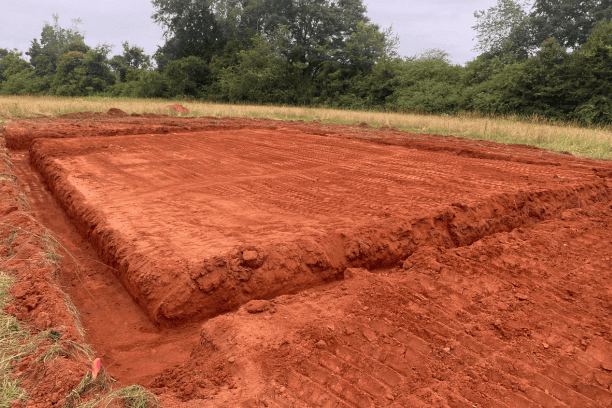
Laser-checked levels and slopes that drain the way they should.
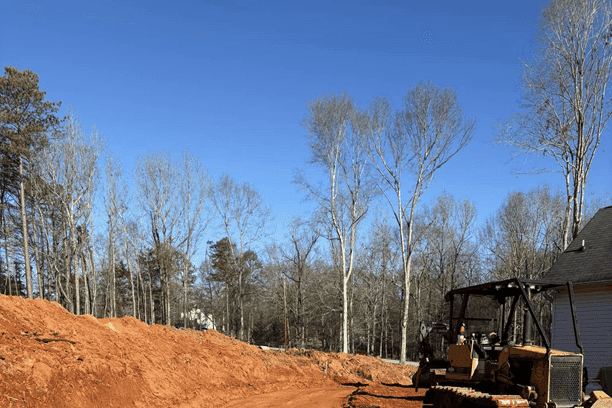
Pads, trenches, and site prep dug right the first time.
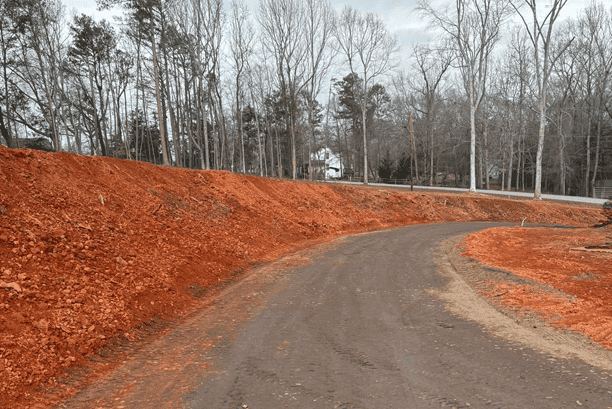
A proper base and a real crown, so the driveway survives Carolina rain.
Farm and fishing ponds with a compacted-clay dam that holds water.
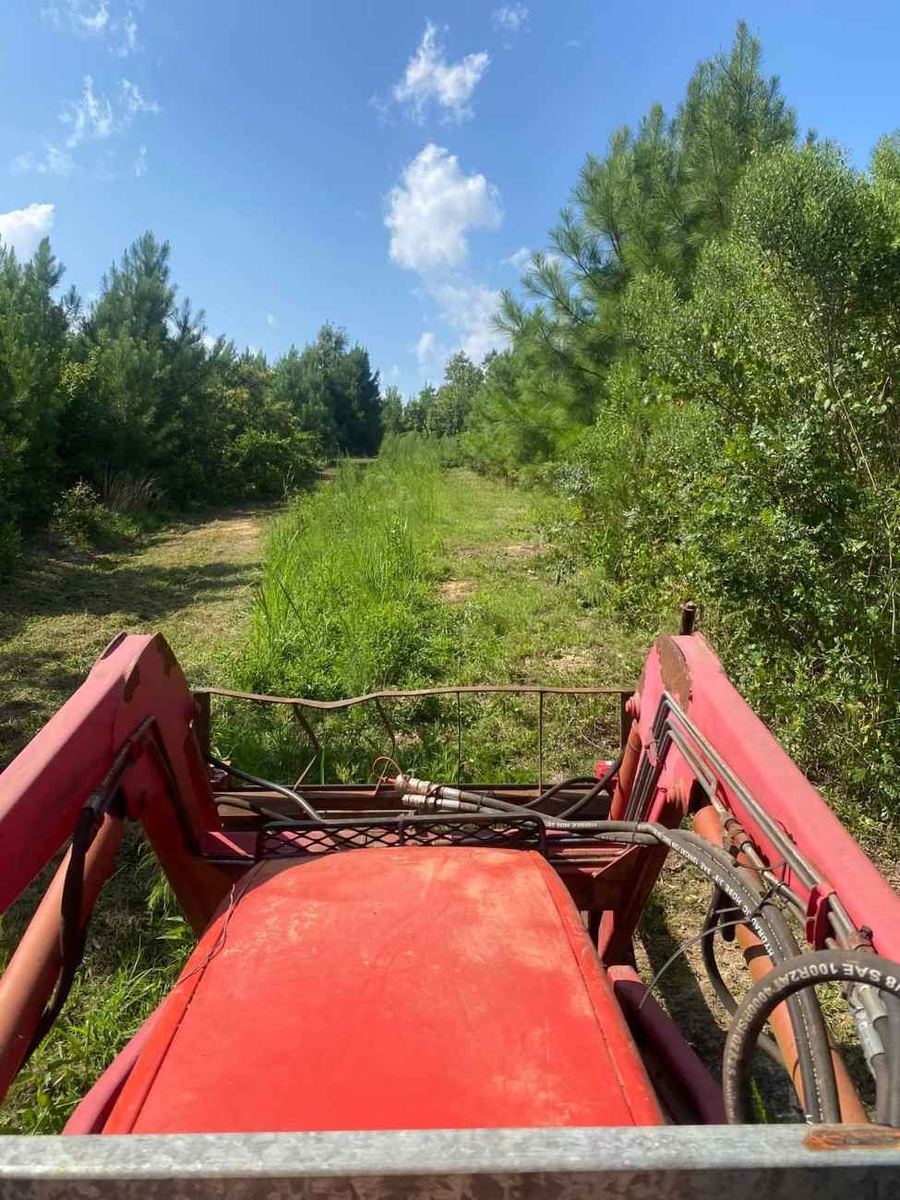
Overgrown fields, pastures, and vacant lots cut back to usable ground.
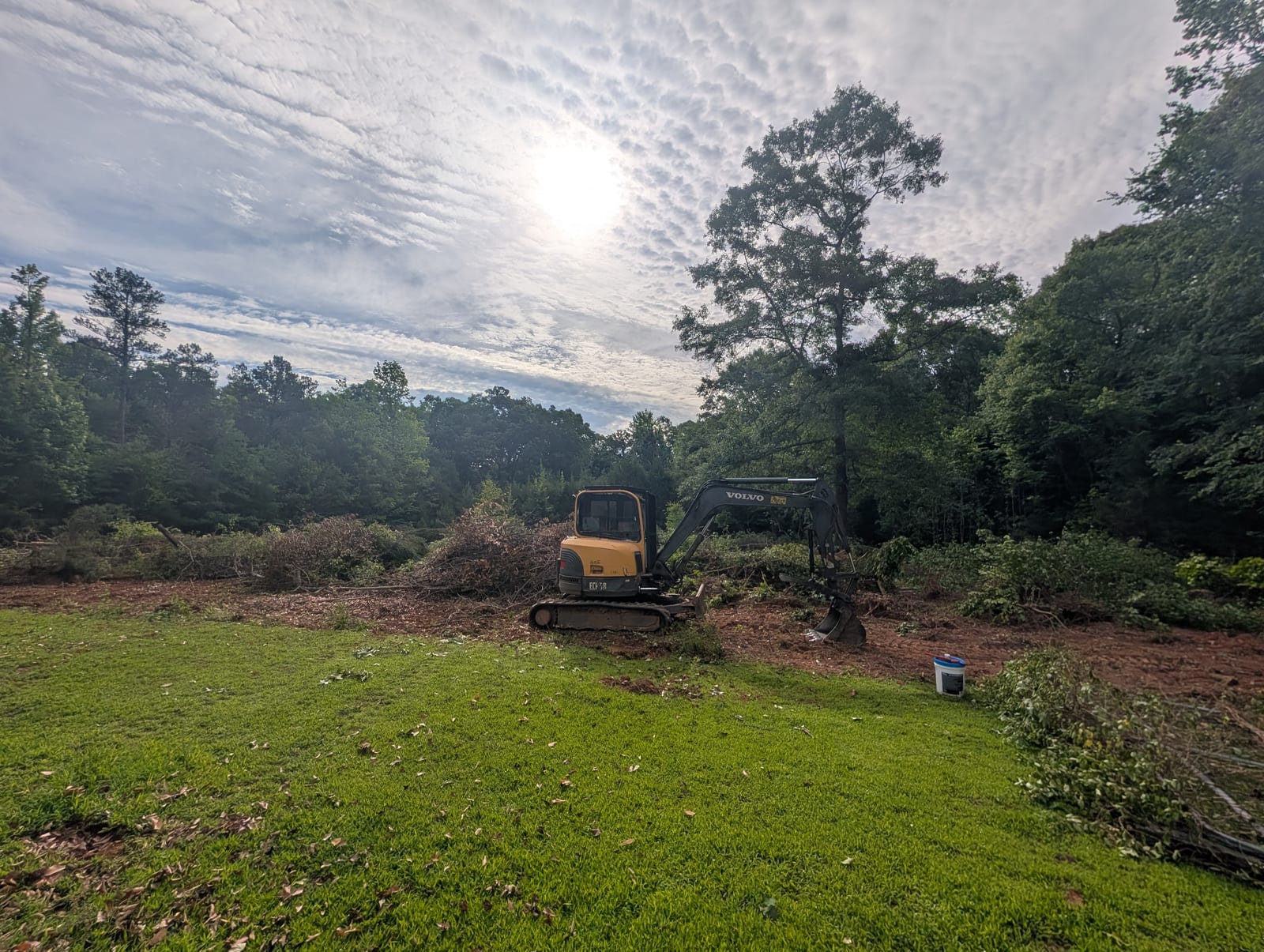
Downed trees, limbs, and debris cleared out — and the ground repaired behind them.
We walk the ground and flag the wire, concrete, low stumps, and rock that hide in tall grass, the things that end a cutter’s day.
Cut height set to what is actually down there, so the machine clears the hazards instead of finding them.
Grass, weeds, briars, and saplings taken down in passes, with cuttings left to break down where they fall.
If part of it has grown past mowing, you hear that on the day, with the clearing priced separately, not discovered later.
Grazing ground and hayfields cut on a schedule that keeps weeds from taking the stand. Two or three cuts a season stays ahead of them; one a year keeps open ground open.
Lots kept cut for owners, agents, and anyone holding land they do not live on, including the ones that arrive with a county or HOA letter attached and a deadline on it.
Fence lines and trails vanish into briars in two seasons. We cut the corridor back to workable width, flagging wire and posts before the cutter goes anywhere near them.
Land shows for what a buyer can see. A cut field reads as acreage; the same field uncut reads as a problem. Timed ahead of photos and showings.
Plots, shooting lanes, and access trails cut back for the season, then again before it opens, so the ground is ready when you are.
Ground we cleared last year stays cheap to keep. Once it is open, a yearly cut holds it there instead of letting it grow back into the clearing price.
Most Upstate bush-hogging lands between roughly $60 and $150 an acre, and the spread is real work, not padding. Open pasture that was cut last year mows fast. Four seasons of briars, hidden stumps, and a slope the tractor has to respect can take three times as long on the same acre. We walk it, price it, and put the number in writing before we start.
Once or twice a year keeps a field a field. Pasture you are actively grazing usually wants two or three cuts a season to stay ahead of weeds; ground you simply want kept open can go once a year. The one interval to avoid is letting it slide past three years, because that is when saplings outgrow a rotary cutter and the job turns into clearing.
It is mowing with a heavy rotary cutter built for rough ground. Where a lawn mower handles grass, a bush hog takes grass, weeds, briars, and saplings up to about an inch or two thick, and leaves the cuttings to break down where they fall. It is maintenance for open land. It does not remove stumps or regrade anything.
No, they are the same job, and both spellings are correct in everyday use. "Bush Hog" is actually a brand name that became the word for the machine, the way people say Band-Aid for a bandage. Whichever way you searched for it, you found the right page.
Chest-high weeds and briars are routine, and saplings up to roughly two inches are usually still cutter work. Past that, meaning arm-thick trunks or ground you cannot see the dirt through, a rotary cutter is the wrong tool. We will quote it as clearing or mulching instead, which is the honest call even though it is the bigger job.
We find them before the cutter does. Old fence wire, dumped concrete, low stumps, and rocks are the normal hazards in ground that has sat, so the site walk includes flagging what has to be avoided and setting the cut height above what is down there. Anything that has to come out gets priced separately rather than discovered mid-job.
Custom Cut Land Works
Based on 1 Google reviews

Richard Bardy
2026-09-01
⭐⭐⭐⭐⭐ Beyond 5 Stars! If you have a complex land, grading, or drainage issue, look no further than Brian at Custom Cut Land Works. We hired Brian to rework ou… Read more
Free written estimate. See the price before any work begins.