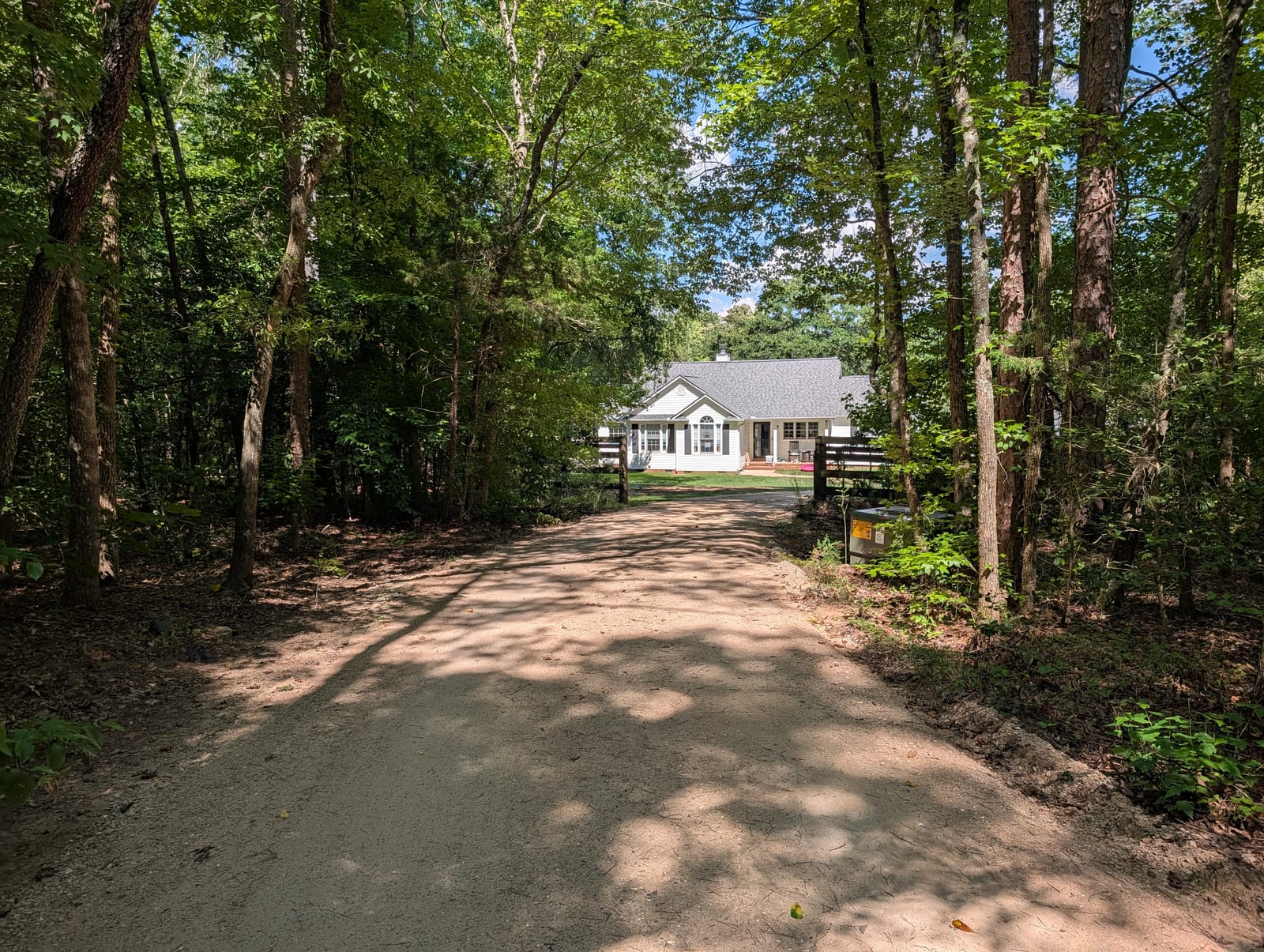
Downed tree removal
Trunks and limbs on the ground cut and hauled with equipment sized for the weight, including the ones a tree crew left behind after taking the standing part.
Downed trees, limbs, and debris cleared out after the storm, plus the ruts, craters, and torn ground repaired behind them.
After a storm the tree is the part you can see. The part that costs you later is the ground: ruts cut by whatever dragged the trunk out, a root ball that pulled a crater when it tipped, torn turf that funnels the next rain toward your foundation. A tree crew is equipped to take a tree down. An earthmoving company is equipped to put the ground back, and that is the half of this job we are built for.
So we scope it as one job, in order. Downed trunks and limbs cut and moved with equipment sized for it. Debris hauled off, mulched, or burned legally with the SC Forestry Commission notified. Root balls and stumps taken out below grade where anything is going back on top. Then the ruts filled and compacted, the ground graded back to where the water leaves the way it did before, and the bare clay seeded or matted so the first hard rain does not turn the repair into a gully.
One honest boundary. A large tree still standing over a house is a climbing job for an arborist with a crane, not an excavator. If that is what you have got, we will say so and tell you what we can take on once it is down. Problem trees on open ground are ours.
Heavy brush to whole wooded lots. Cleared, hauled, and left build-ready.
Learn more →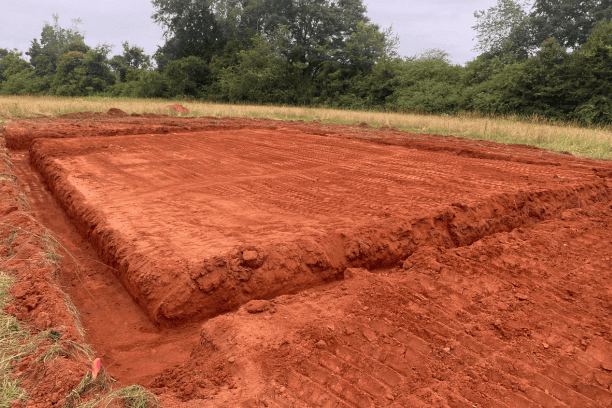
Laser-checked levels and slopes that drain the way they should.
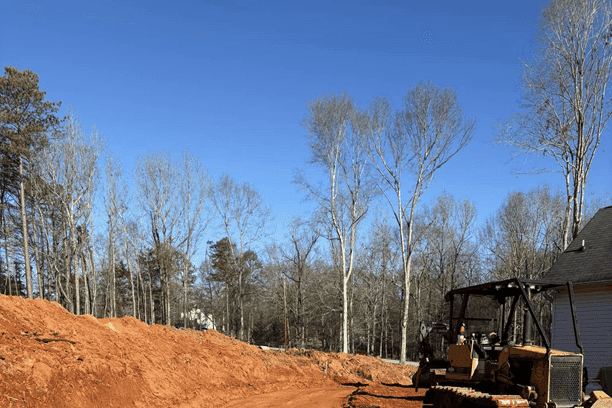
Pads, trenches, and site prep dug right the first time.
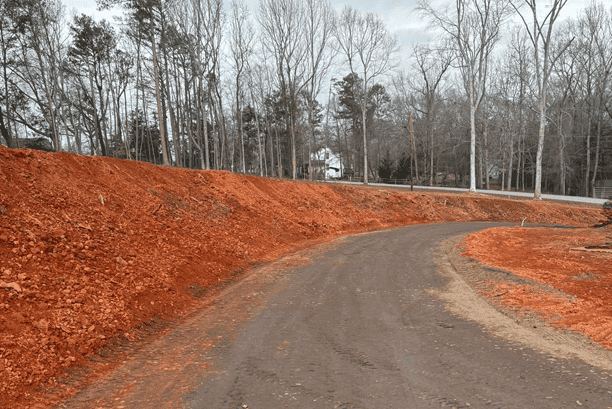
A proper base and a real crown, so the driveway survives Carolina rain.
Farm and fishing ponds with a compacted-clay dam that holds water.
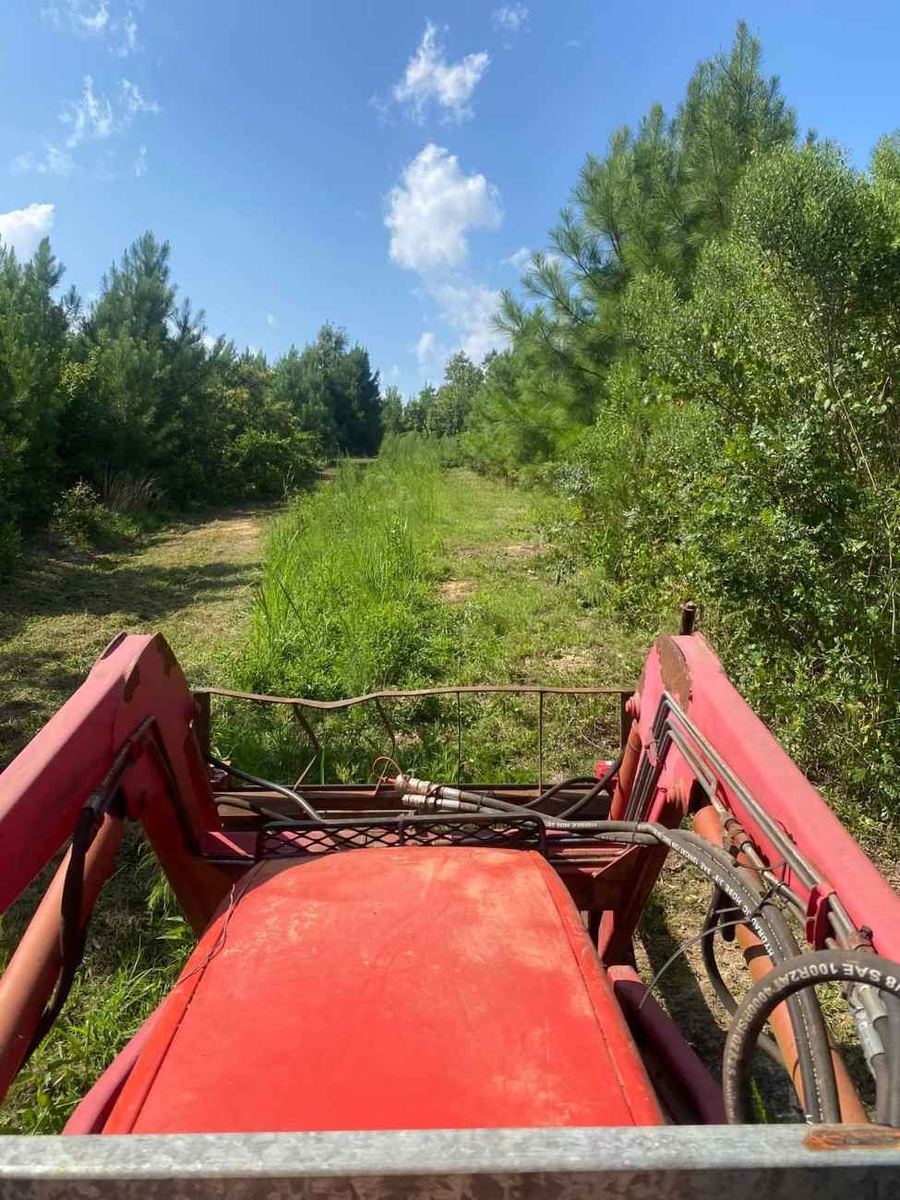
Overgrown fields, pastures, and vacant lots cut back to usable ground.
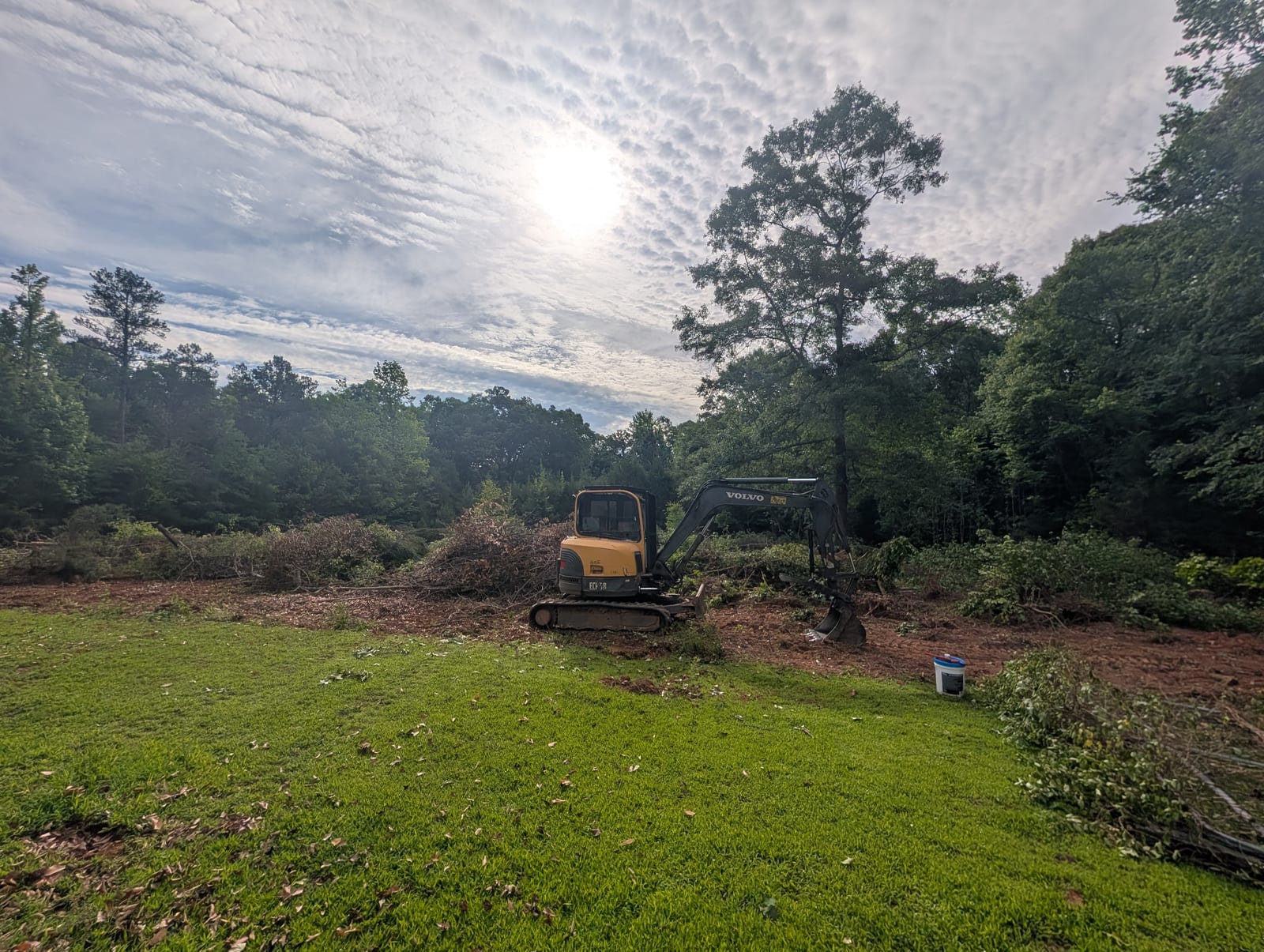
Downed trees, limbs, and debris cleared out — and the ground repaired behind them.
Whatever is blocking a drive, gate, or fence line comes out first so the property is usable while the rest is scheduled.
Trunks and limbs cut down to sizes equipment can handle and moved out with machines built for the weight.
Taken out below grade where anything is going back on top, and the crater filled in compacted lifts so it does not settle.
Ruts filled, grades put back so water leaves the way it used to, bare clay seeded or matted before the next hard rain.
Trunks and limbs on the ground cut and hauled with equipment sized for the weight, including the ones a tree crew left behind after taking the standing part.
A tipped tree lifts a plate of soil with it. We take the root ball out, fill the crater in compacted lifts, and grade it level so it does not settle into a low spot that ponds.
Heavy equipment on wet ground leaves ruts that channel water. We fill, compact, re-grade to the original fall, and stabilize the bare clay so the fix survives the next storm.
Piles left from your own work or someone else’s, loaded and gone. Hauled off, mulched, or burned legally. Never buried on your property.
Blowdown across pasture and wooded acreage worked systematically: access opened first, then the wood, then the ground, so the property comes back usable rather than just tidy.
A drive or gate blocked is its own job and gets done first, often within a day or two, with the full cleanup scheduled behind it.
It is priced by what is on the ground and how far it has to travel, so a single downed tree with easy access is a few hundred dollars while a wooded lot full of blowdown runs into the thousands. The three things that move the number are volume of debris, how close equipment can get to it, and whether the ground underneath needs repair. All three get scoped on the walk and written down.
Yes, and on a tipped tree it usually matters more than the trunk. When a tree goes over, the root plate lifts a crater of soil with it. We take the root ball out, fill and compact the hole in lifts so it does not settle into a low spot, and grade the surface back level with what is around it.
Often, partly. Most homeowner policies cover debris removal when the tree hit something covered, with a cap that is commonly around $500 to $1,000 for a tree that fell on nothing. We are not the ones to read your policy, but we do give you an itemized written quote, which is the document adjusters ask for.
Access-clearing first, usually within a day or two of the call. Getting a driveway open or a tree off a fence line is a different job from a full cleanup, and we will do the urgent part first and schedule the rest. Being owner-run means the person who quotes it is the person who shows up.
Damaged trees on open ground, yes. A large tree leaning over a house needs a climbing crew with a crane, and that is an arborist's job rather than ours — we will tell you that plainly rather than take on work that needs a different rig. Once it is down, the cleanup and the ground repair are ours.
Hauled off, mulched into the property, or burned legally with the SC Forestry Commission notified. Your choice, priced during the walk. What we never do is bury it. Buried debris decays and settles for years, and it shows up later as a sunken driveway or a cracked slab long after the contractor is gone.
Custom Cut Land Works
Based on 1 Google reviews

Richard Bardy
2026-09-01
⭐⭐⭐⭐⭐ Beyond 5 Stars! If you have a complex land, grading, or drainage issue, look no further than Brian at Custom Cut Land Works. We hired Brian to rework ou… Read more
Free written estimate. See the price before any work begins.