Farm ponds, fishing ponds, and pond rescues across the Upstate, built to hold water by a family crew with real dirt-work experience.
A pond that holds water is three jobs done right. First, the core trench: a cut under the dam’s footprint down to tight native soil, refilled with high-clay material in compacted layers, so water can’t sneak underneath. Second, the dam itself, built up in thin, compacted lifts at the right moisture, never pushed-up loose spoil full of topsoil and roots. Third, the overflow: a principal spillway pipe and an emergency spillway sized for storms, because most ponds don’t fail by leaking. They fail when big water goes over or through the dam.
Here’s the good news for Upstate landowners: the red clay that causes drainage headaches everywhere else is exactly what a pond wants. Most sites we walk have dam-grade material already on the property. We check the soil, design the depth and slopes around what the pond is for (fishing, livestock, irrigation, or just the view), and give you a written scope and price before a bucket touches the ground.
Already have a pond that’s leaking, silted in, or cutting a gully through its spillway? Repair starts with diagnosis: through the dam, under it, or over it. We find which one it is and fix the cause, not the symptom.
Heavy brush to whole wooded lots. Cleared, hauled, and left build-ready.
Learn more →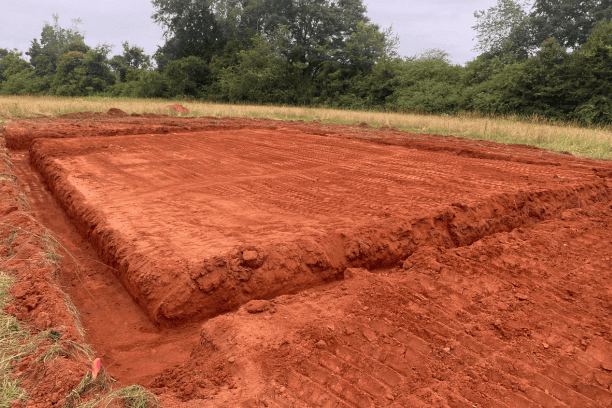
Laser-checked levels and slopes that drain the way they should.
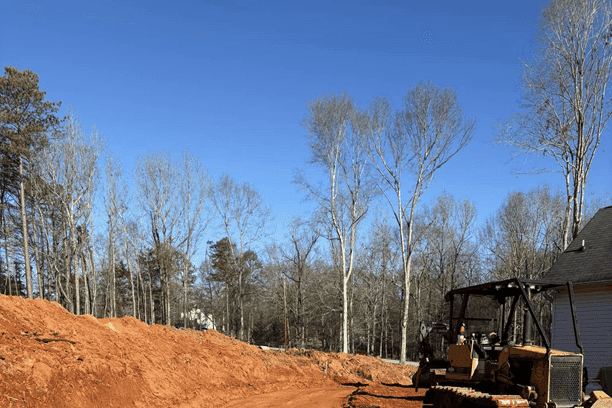
Pads, trenches, and site prep dug right the first time.
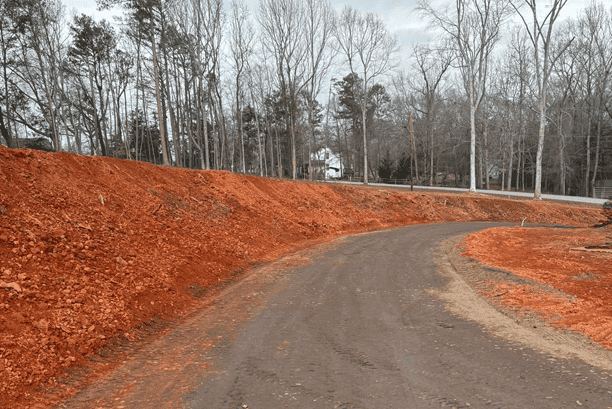
A proper base and a real crown, so the driveway survives Carolina rain.
Farm and fishing ponds with a compacted-clay dam that holds water.
We walk the site, check the soil for clay content, and flag anything that touches a creek or wetland before designing a thing.
Fishing, livestock, irrigation, or looks: the purpose sets the depth, slopes, and spillway. You get a written scope and price.
The dam is keyed into tight native soil and built up in thin, compacted layers of high-clay fill — the difference between a pond and a puddle.
Spillways set, banks shaped and seeded, disturbed ground stabilized so the first big storm doesn’t undo the work.
Usually not for a typical residential or farm pond. South Carolina regulates dams that are 25 feet or more high or that hold back 50 acre-feet or more of water. Most private ponds fall well under both, and the state offers a certificate of exemption. If your site touches a stream or wetland, other rules can apply. We flag that on the walk, not after.
National cost guides put a half-acre farm pond with a dam and overflow at roughly $20,000 and up, and a properly built one-acre pond commonly starts around $45,000. Soil, depth, and dam size swing it widely. We check your soil and quote your pond in writing after a free site walk.
Most guides recommend 8–12 feet for a fishing pond in our climate, deep enough for fish to ride out summer heat and dry spells. Purpose drives the design: livestock and irrigation ponds are built differently than a bass pond.
That’s a soil question, and it’s the first thing we check. Soil with enough clay, placed in compacted layers over a proper core trench, holds water. A hole scraped out and ringed with loose spoil doesn’t. Upstate red clay is genuinely good pond material, and most sites here can be built to hold.
Yes. Repair starts with finding the path: through the dam (bad fill), under it (no core trench), or over it (spillway failure). We also dredge silted-in ponds back to useful depth. Diagnosis first, then a written fix.
Free written estimate. See the price before any work begins.